
The Global Rise of Political Marketing: Strategies Redefining Modern Democracies

Political marketing has evolved from a marginal practice to one of the most powerful forces shaping democracies across the world. What once relied primarily on public speeches, televised debates and traditional advertising has transformed into a highly strategic field where data analytics, digital persuasion and audience segmentation converge to influence political outcomes on a global scale. From presidential elections in the Americas to parliamentary races in Europe and Asia, political communication has become both more sophisticated and more competitive, driving governments, political parties and candidates to rethink how they connect with citizens.
In recent years, major political events have highlighted a crucial reality: modern voters are overwhelmed with information, exposed to countless messages and deeply fragmented in their interests and digital habits. Connecting with them now requires more than charisma or ideology. It requires a deeper understanding of behavioral patterns, cultural nuances and the way narratives shape public opinion. The transformation of communication ecosystems has forced political actors to adopt strategies that combine psychology, storytelling, digital optimization and crisis management to remain relevant in a rapidly shifting environment.
One of the most defining aspects of contemporary political marketing is the rise of digital campaigning. Social media platforms have become essential arenas for discourse, policymaking debates and voter mobilization. Campaigns today rely heavily on data-driven advertising, micro-targeted messaging, real-time content creation and influencer collaboration. These tactics enable political teams to engage with specific communities, address local concerns and craft narratives that resonate more authentically with diverse groups of voters. As a result, political marketing professionals must navigate emerging technologies and ethical considerations while ensuring transparency and credibility in every communication strategy.
Global political dynamics have also contributed to this transformation. The increasing polarization in many nations has intensified the competition for attention and trust. Citizens expect political leaders to be accessible, accountable and capable of communicating clearly in times of uncertainty. From economic instability to geopolitical tensions, voters want comprehensive explanations and practical solutions. In this scenario, political marketing becomes a bridge between institutions and society, helping leaders articulate proposals in ways that are understandable, persuasive and emotionally resonant.
Furthermore, political marketing extends far beyond electoral campaigns. In many countries, governments rely on strategic communication to implement social programs, manage public crises, foster civic participation and maintain institutional legitimacy. Public affairs teams use marketing tools to identify citizen priorities, evaluate public sentiment and design communication policies that strengthen the relationship between the state and the population. This shift demonstrates that political marketing is becoming a long-term strategic function rather than a tool activated only during election seasons.
However, the increasing complexity of the field demands professionals with a strong academic foundation and updated competencies. Traditional political science training often does not cover digital persuasion, strategic communication design, reputation management or crisis communication at the level required by today’s political environment. This global demand for specialized education has led to a growing interest in advanced training programs that combine theoretical foundations with practical applications.
Responding to this need, Itae Business School, a higher education institution based in Spain and dedicated to advanced professional training, has developed the Master Executive in Political Communication and Marketing. This program is designed for professionals from diverse backgrounds who seek to become leaders in political communication, campaign management and public strategy. Positioned as an international program, it integrates global perspectives and case studies that reflect the distinct challenges faced by democracies around the world.
The master’s program places strong emphasis on understanding political behavior, designing effective communication strategies and mastering the digital tools required to influence public opinion ethically and strategically. Participants explore real-world political cases, learn to build campaign narratives, manage communication crises and apply advanced digital marketing techniques within political contexts. By combining academic rigor with practical scenarios, the program prepares graduates to assume roles in political consulting firms, governmental institutions, electoral campaigns, public affairs departments and international organizations.
At a global level, the need for ethical and professionally trained political communicators is increasingly urgent. As misinformation spreads rapidly and public trust fluctuates, societies benefit from experts capable of promoting transparency, strengthening democratic dialogue and guiding political actors toward responsible communication practices. Programs like the Master Executive in Political Communication and Marketing represent an essential response to the evolving demands of global democracies.
Ultimately, political marketing will continue to redefine how leaders connect with citizens. As the world becomes more interconnected and politically complex, the ability to craft meaningful, persuasive and responsible political communication is becoming a central pillar of democratic stability. Institutions like Itae Business School are contributing to this transformation by preparing the next generation of specialists who will design the narratives and strategies shaping the political future.
Related Articles
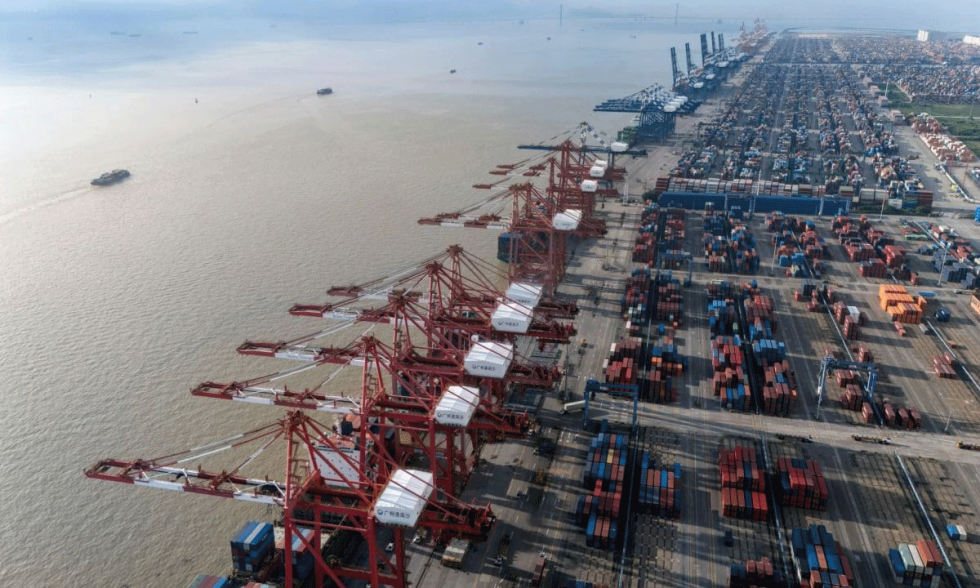
China’s expanding trade surplus reflects its growing role at the center of global manufacturing and supply networks. The trend is reshaping how companies, industries and education systems prepare for long term economic transformation.

Google is testing a new productivity assistant that operates directly through email, using artificial intelligence to organize tasks and support daily work. The experiment reflects a broader shift toward embedding AI into core workplace routines rather than standalone applications.

Business leaders are increasingly using ChatGPT as a learning companion to explore strategic scenarios inspired by iconic executives. The practice highlights how artificial intelligence is reshaping leadership development and executive education.
Comentarios