
How executives are using ChatGPT to sharpen leadership thinking and strategic skills

Artificial intelligence is no longer limited to automating tasks or improving operational efficiency. Among senior executives, ChatGPT is emerging as a tool for learning, reflection and strategic skill development, helping leaders explore ideas through simulated advice inspired by iconic figures in business.
Rather than seeking direct answers, executives are asking the AI to respond as if it were a well known business leader, investor or strategist. The goal is not to replace human judgment, but to expand thinking, challenge assumptions and strengthen decision making processes through exposure to different leadership perspectives.
This practice signals a broader shift in how leaders approach continuous learning in a rapidly changing business environment.
Learning through simulation and reflection
Simulation has long been used in executive education through case studies, role playing and scenario planning. ChatGPT introduces a new layer to this approach by offering instant, customizable simulations that leaders can adapt to their specific challenges.
By prompting the AI to adopt the mindset of a particular business icon, executives gain access to structured reasoning patterns, strategic frameworks and leadership philosophies commonly associated with those figures. This allows leaders to reflect on their own thinking and compare it with alternative approaches in a low risk, exploratory setting.
The value lies not in the authority of the response, but in the process of reflection it triggers.
AI as a companion for strategic thinking
Strategic thinking is a core leadership skill that requires exposure to diverse viewpoints. Traditionally, executives develop this skill through experience, mentoring and formal education. AI tools like ChatGPT are now complementing these methods by acting as on demand thinking partners.
Leaders report using the tool to test strategic hypotheses, explore growth options, rethink organizational goals and structure internal discussions more effectively. By generating multiple perspectives quickly, the AI supports deeper analysis and encourages leaders to move beyond habitual ways of thinking.
This form of interaction aligns closely with modern approaches to executive learning, which emphasize agility, adaptability and lifelong skill development.
Implications for executive education
The growing use of AI by executives has important implications for executive education programs. Business schools and professional learning providers are increasingly examining how tools like ChatGPT can be integrated into leadership development curricula.
Instead of viewing AI solely as a technical subject, educators are exploring its role as a cognitive tool that supports problem solving, critical thinking and strategic reasoning. This approach positions AI as part of the leadership skill set, rather than as a separate technological competency.
As a result, executive education is shifting toward teaching leaders how to ask better questions, interpret AI generated insights and combine them with human judgment.
Developing AI literacy among leaders
Effective use of ChatGPT requires a level of AI literacy that goes beyond basic familiarity. Leaders must understand how prompts shape outputs, how bias can emerge in responses and why AI generated content should be evaluated critically.
This reinforces the importance of education focused on responsible and informed use of artificial intelligence. Leaders who understand the strengths and limitations of AI are better equipped to use it as a learning tool without over relying on it for decision making.
AI literacy is becoming a foundational skill for modern leadership, similar to financial or data literacy in previous decades.
Enhancing decision making without replacing human judgment
While AI can offer valuable insights, executives emphasize that final decisions remain a human responsibility. ChatGPT does not possess contextual awareness of organizational culture, internal constraints or real time market conditions.
Its role is to support thinking, not to dictate outcomes. Leaders who use AI effectively treat its responses as inputs to discussion, not conclusions. This balanced approach helps prevent overconfidence in automated insights while preserving the benefits of speed and perspective diversity.
The combination of AI assisted ideation and human evaluation reflects a hybrid model of decision making that is gaining traction across industries.
Preparing leaders for complex environments
Modern leadership involves navigating uncertainty, complexity and rapid change. Tools that help leaders rehearse decisions, explore alternative paths and question assumptions can strengthen their readiness for these challenges.
ChatGPT offers a flexible environment for this kind of cognitive practice. Executives can experiment with different strategic directions, leadership styles and communication approaches without external pressure.
This form of mental rehearsal supports the development of confidence, adaptability and strategic clarity, qualities increasingly demanded of leaders in global organizations.
The future of leadership learning
The use of ChatGPT by executives points to a future where leadership learning is more personalized, continuous and integrated into daily work. Instead of relying solely on formal programs, leaders are augmenting their learning through AI supported reflection and exploration.
For educators, institutions and organizations, this trend highlights the need to rethink how leadership development is designed and delivered. AI is not replacing education, but reshaping how leaders engage with knowledge, experience and strategic thinking.
As artificial intelligence becomes more embedded in professional life, its role in shaping how leaders learn, think and decide will continue to expand, redefining the boundaries of executive education in the process.
Source: CNBC
Related Articles

Financial literacy is gaining global importance as young people face complex economic decisions earlier in life.

Mental health challenges are reshaping healthcare systems and professional training worldwide. Specialized education in clinical psychology is emerging as a key response to this growing global demand.
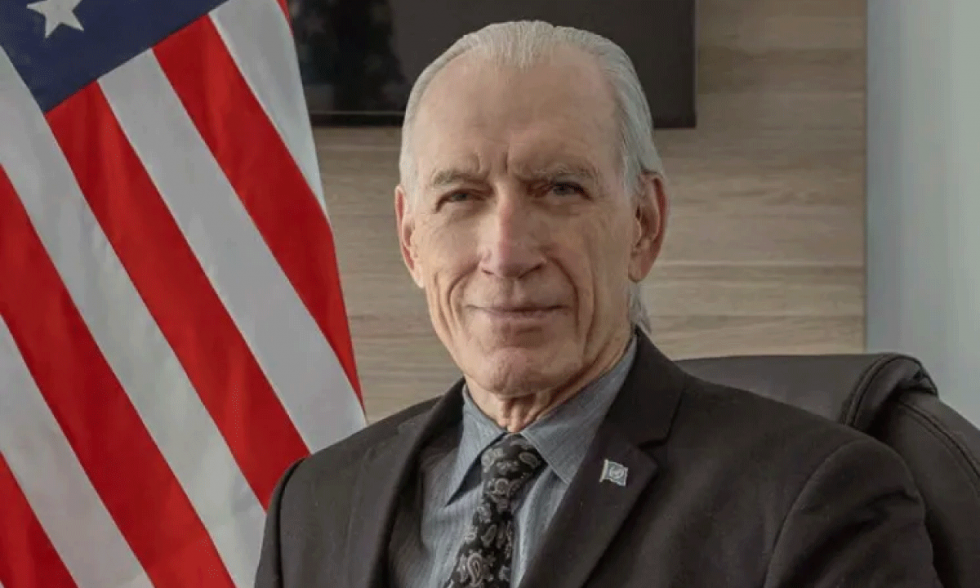
Sherman Roberts, President of Blackwell Global University, discusses the growing importance of the Doctor of Business Administration in shaping strategic leaders and applied researchers. He emphasizes its impact on innovation, executive careers, and global business development.
Comentarios