
How Nicholas Thompson Uses a Custom GPT to Transform His Training, Writing and Daily Productivity
When Nicholas Thompson talks about the future of personal performance, he is not referring to new training shoes or the latest productivity methodology. Instead, the CEO of The Atlantic has built his own custom GPT model to support the way he runs, writes and manages time. In an in-depth conversation on WIRED’s The Big Interview podcast, Thompson offers a rare look into how he integrates artificial intelligence into his daily routines and long-term goals.
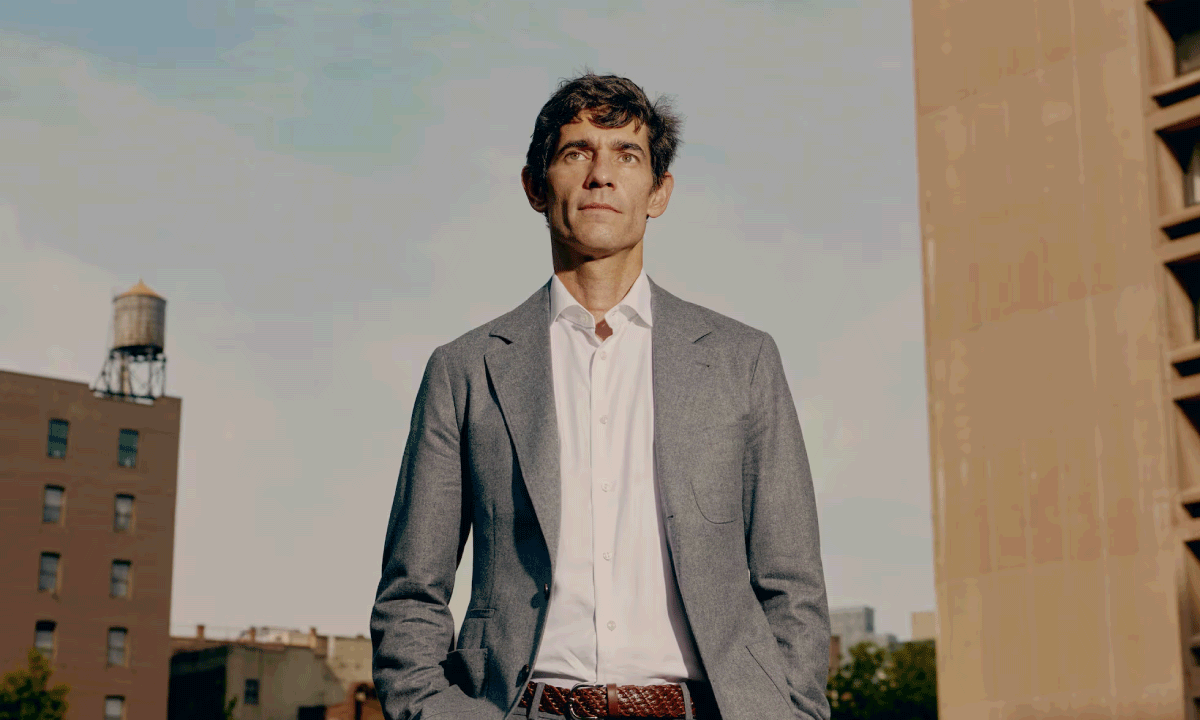
Thompson has been a central figure in the intersection between media, technology and innovation for more than a decade. As former editor-in-chief of WIRED, he has chronicled the evolution of emerging technologies. Today, he applies many of those concepts to his own life, beginning with a highly personal project: a GPT that contains his complete running history.
According to Thompson, he fed the model with detailed records from Strava, past training cycles, pacing metrics, and performance logs accumulated over years. The result is an AI system capable of assessing his condition from day to day. He can ask the model whether he should postpone a workout or adjust his pace, and the GPT responds based on patterns in his own physiological and behavioral data. For him, it acts like a personalized coach that understands not only general training principles but his specific strengths and weaknesses.
But Thompson’s AI experiment does not stop at running. He is currently finishing his upcoming book, The Running Ground, a project shaped by his experiences as a runner, father and cancer survivor. For five years, he recorded conversations with athletes, family members and influential figures in his life. He uploaded all of these transcripts into his GPT, and the model helped him identify quotes he had overlooked, themes he had underdeveloped and narrative gaps that needed refinement. It did not write the book for him, he emphasizes, but it significantly strengthened the precision and structural clarity of his manuscript.
From a global learning perspective, Thompson’s approach offers a compelling case study on how AI can enhance—not replace—human creativity. His method suggests that the most powerful applications of AI in education, writing and research involve using it as a tool for synthesis, analysis and discovery. Rather than delegating the creative process, he uses the technology to deepen it.
Running remains central to Thompson’s identity, and in the interview he reflects on how the sport has shaped his worldview. He recounts the impact of surviving thyroid cancer in his 30s, an experience that changed both his understanding of health and his commitment to training. His recovery pushed him to adopt new methods, collaborate with elite coaches at Nike and explore more scientific approaches to performance.
Thompson’s philosophy centers on what he describes as learning to “suffer differently.” For him, the most significant growth occurs when the mind learns to navigate discomfort—not by ignoring it, but by understanding its signals. He explains that pain in a race is often rooted in psychological resistance rather than physical limits. Training the mind to interpret discomfort differently, he argues, is essential for endurance, leadership and personal development.
His day-to-day life reflects the same intentionality. Thompson typically runs to his office, returns home on foot or by running, and schedules breakfast with his children as a fixed priority. His time-management system includes a three-tier board that divides tasks into urgent, important and social. He also records short daily videos on technology and culture, often using his commute or training sessions to generate ideas.
For professionals across fields—including education, technology, business and leadership—Thompson’s habits illustrate how AI can serve as a powerful extension of human discipline. By integrating a personalized GPT into both creative and physical routines, he demonstrates how technology can reinforce long-term consistency, sharpen insights and support balanced decision-making.
The model he built is not a mass-market product. It is a tailored system, created to answer questions rooted in his own patterns, ambitions and constraints. This personalized approach may be a preview of what the next generation of AI tools will offer: systems capable of delivering recommendations not from generalized data, but from the user’s lived history.
Thompson’s interview ultimately reveals a professional who sees AI not as a futuristic abstraction but as a companion in his process of becoming more efficient, more thoughtful and more resilient. It is a portrait of a leader who merges curiosity, discipline and technology to navigate both personal and professional challenges. And it suggests that the future of learning and performance—whether on the page, in the office or on a marathon route—may be shaped as much by data-driven insight as by human determination.
Source: Wired
Related Articles

China’s expanding trade surplus reflects its growing role at the center of global manufacturing and supply networks. The trend is reshaping how companies, industries and education systems prepare for long term economic transformation.

Google is testing a new productivity assistant that operates directly through email, using artificial intelligence to organize tasks and support daily work. The experiment reflects a broader shift toward embedding AI into core workplace routines rather than standalone applications.
Business leaders are increasingly using ChatGPT as a learning companion to explore strategic scenarios inspired by iconic executives. The practice highlights how artificial intelligence is reshaping leadership development and executive education.
Comentarios