
International Academic Continuity as a Driver of Social Mobility in Emerging Economies

Higher education has long been associated with upward social mobility, but in an increasingly interconnected labor market, the value of education is no longer measured solely by access to a degree. Recognition, portability and international credibility have become decisive factors in determining whether academic achievement translates into real professional advancement. In this context, international academic continuity has emerged as a critical lever for social mobility, particularly in emerging economies such as Peru.
Across Latin America, higher education systems have expanded rapidly over the past two decades. While enrollment rates have grown, structural challenges remain. Many graduates face limited professional mobility due to degrees that lack international recognition or pathways for further academic progression beyond national borders. This gap has prompted a growing demand for educational models that do not end at graduation, but instead connect local training with global academic ecosystems.
Academic continuity refers to structured pathways that allow students to progress from technical or undergraduate studies into internationally recognized professional degrees. When designed effectively, these pathways reduce barriers related to cost, geography and institutional fragmentation, making global credentials more accessible to students who would otherwise be excluded from international education opportunities.
In Peru, this issue is particularly significant. The country has made substantial investments in expanding higher education access, yet professional mobility remains uneven. According to regional labor studies, Peruvian professionals often encounter difficulties validating their qualifications abroad or competing for roles within multinational organizations. As a result, academic progression increasingly depends not only on academic performance, but on institutional networks and cross border recognition frameworks.
This is where international partnerships between local institutions and foreign universities play a transformative role. Peruvian higher education institutions that align their curricula, academic standards and credit systems with international universities are creating alternative routes to professional advancement. These models allow students to begin their education locally while maintaining access to globally accredited qualifications.
Blackwell Global University, a U.S. based private university with an international academic orientation, represents one such model within this evolving landscape. Through academic alliances with institutions in Latin America, including Peru, Blackwell Global University has positioned international academic continuity as a core component of its educational approach. Rather than functioning as an isolated provider, the university integrates with local institutions to create structured progression routes toward American professional degrees.
In practical terms, these alliances enable graduates from Peruvian institutions to pursue academic continuity programs that lead to internationally recognized titles. For students, this reduces the need to restart their education abroad, a process that is often financially and administratively prohibitive. Instead, previously completed studies are articulated into a broader academic framework with global recognition.
The social impact of these pathways extends beyond individual career outcomes. International academic continuity contributes to workforce diversification by enabling professionals from emerging economies to access global labor markets. This, in turn, supports knowledge exchange, professional mobility and economic integration across regions. For countries like Peru, it also helps mitigate the risk of academic stagnation, where local qualifications do not translate into competitive professional capital internationally.
Critically, academic continuity models also address inequality within higher education systems. Traditional international education routes often favor students with substantial financial resources or access to elite institutions. By contrast, continuity programs embedded within local educational ecosystems expand global access to a broader demographic. This democratization of international credentials plays a measurable role in advancing social mobility.
From an institutional perspective, international academic continuity reflects a shift in how universities conceptualize their role. Rather than acting solely as degree granting entities, universities are increasingly positioned as connectors between local talent and global professional networks. This aligns with broader trends in global education, where adaptability and cross border relevance are becoming essential indicators of institutional value.
The Peruvian case illustrates how these dynamics are unfolding in practice. Local institutions that prioritize international alignment are responding to labor market demands that extend beyond national borders. At the same time, international universities that engage with emerging markets are redefining their global mission, moving away from one directional mobility toward collaborative academic ecosystems.
As global labor markets continue to evolve, the link between education and social mobility will depend increasingly on the ability of academic systems to transcend national limitations. International academic continuity offers a scalable and inclusive mechanism to achieve this goal. In emerging economies, where talent potential often exceeds structural opportunity, such pathways represent more than an academic option; they function as instruments of long term social transformation.
For students, institutions and policymakers alike, the challenge now lies in ensuring that these models remain accessible, transparent and academically rigorous. When aligned effectively, international academic continuity has the potential to reshape not only individual career trajectories, but the broader relationship between education and social mobility on a global scale.
Related Articles

Financial literacy is gaining global importance as young people face complex economic decisions earlier in life.

Mental health challenges are reshaping healthcare systems and professional training worldwide. Specialized education in clinical psychology is emerging as a key response to this growing global demand.
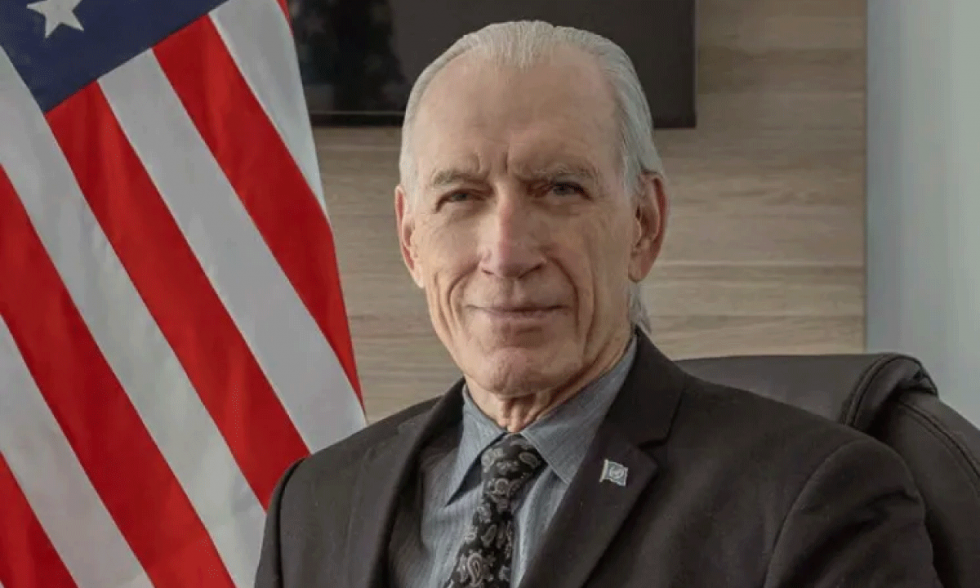
Sherman Roberts, President of Blackwell Global University, discusses the growing importance of the Doctor of Business Administration in shaping strategic leaders and applied researchers. He emphasizes its impact on innovation, executive careers, and global business development.
Comentarios