
OpenAI Communications Chief Hannah Wong Departs as Scrutiny of AI Governance Intensifies
OpenAI, one of the world’s most influential artificial intelligence companies, is navigating a new transition following the departure of Hannah Wong, its chief communications officer. The move comes at a time when AI development is no longer confined to technical discussions, but sits at the center of global debates on regulation, ethics, economic impact and public accountability.
Wong played a central role in shaping how OpenAI communicated its mission, research priorities and product evolution to the public. Her exit underscores how communication leadership has become a strategic function in AI organizations whose technologies affect millions of people across industries and societies.
Communication at the heart of AI governance
As artificial intelligence systems become embedded in education, healthcare, business operations and public discourse, the way companies explain and contextualize their technologies has gained unprecedented importance. For OpenAI, communication is not simply about media relations, but about articulating how powerful AI models are developed, deployed and governed.
In recent years, OpenAI has transitioned from a research-focused organization into a major commercial player, with products used globally by individuals, enterprises and institutions. This shift has increased expectations around transparency and consistency, placing added pressure on leadership teams responsible for public messaging.
The departure of a senior communications executive during this phase highlights the challenges AI companies face in aligning innovation with societal expectations.
A sector under growing scrutiny
The timing of Wong’s exit is notable. Governments around the world are advancing regulatory frameworks aimed at artificial intelligence, seeking to balance innovation with safeguards for privacy, security and fairness. At the same time, academics and civil society groups are calling for clearer accountability from companies developing advanced AI systems.
OpenAI has frequently found itself at the center of these discussions, both as a symbol of AI’s potential and as a focal point for concerns about concentration of power and decision-making transparency. In this environment, every public statement carries weight, and silence can be interpreted as a strategic choice.
For organizations operating at this scale, communication leadership is increasingly intertwined with policy engagement and institutional trust.
Leadership transitions and organizational maturity
Leadership changes in fast-growing technology companies are often interpreted as signals of organizational evolution rather than instability. As companies mature, roles that were once operational must adapt to a broader strategic scope.
In the case of OpenAI, the communications function has evolved alongside the company’s expanding influence. What once involved explaining research breakthroughs now includes navigating geopolitical sensitivities, regulatory conversations and ethical considerations surrounding AI deployment.
Observers note that these pressures require a rare combination of technical literacy, policy awareness and public engagement skills. The departure of a senior figure in this area raises questions about how OpenAI will recalibrate its approach during a pivotal period for the industry.
Implications for the global AI ecosystem
Beyond OpenAI, Wong’s exit reflects a broader shift across the technology sector. As artificial intelligence becomes a foundational layer of the global economy, companies are being judged not only on performance and innovation, but on how responsibly they communicate risks, limitations and long-term intentions.
This shift has implications for education and workforce development. Universities, training institutions and professional programs are increasingly focused on AI governance, ethics and communication, recognizing that technical expertise alone is insufficient in a world shaped by algorithmic decision-making.
For Global Learn’s audience, the episode underscores the growing intersection between technology leadership and public understanding. The ability to communicate complex systems clearly is emerging as a core competency for future leaders in AI and related fields.
Trust as a competitive advantage
In the AI sector, trust is becoming a decisive competitive factor. Organizations that communicate openly and coherently are better positioned to build long-term relationships with users, partners and regulators. Conversely, perceived opacity can slow adoption and invite external intervention.
OpenAI’s challenge moving forward will be to maintain continuity in its public narrative while adapting to an evolving regulatory and social landscape. The company’s next steps in communication leadership will be closely watched as indicators of how it intends to balance innovation with accountability.
A moment that reflects a larger transformation
The departure of Hannah Wong is not merely a personnel change. It reflects the broader transformation of artificial intelligence from a technical frontier into a defining force of modern society. As AI reshapes how people learn, work and interact, the institutions behind it must engage in clearer, more inclusive dialogue.
For the global AI community, the episode serves as a reminder that communication is no longer peripheral to technological progress. It is central to how innovation is understood, regulated and ultimately accepted.
As artificial intelligence continues to evolve, the companies shaping its future will be measured not only by what they build, but by how effectively they explain their role in shaping the world ahead.
Source: Wired
Related Articles

Financial literacy is gaining global importance as young people face complex economic decisions earlier in life.

Mental health challenges are reshaping healthcare systems and professional training worldwide. Specialized education in clinical psychology is emerging as a key response to this growing global demand.
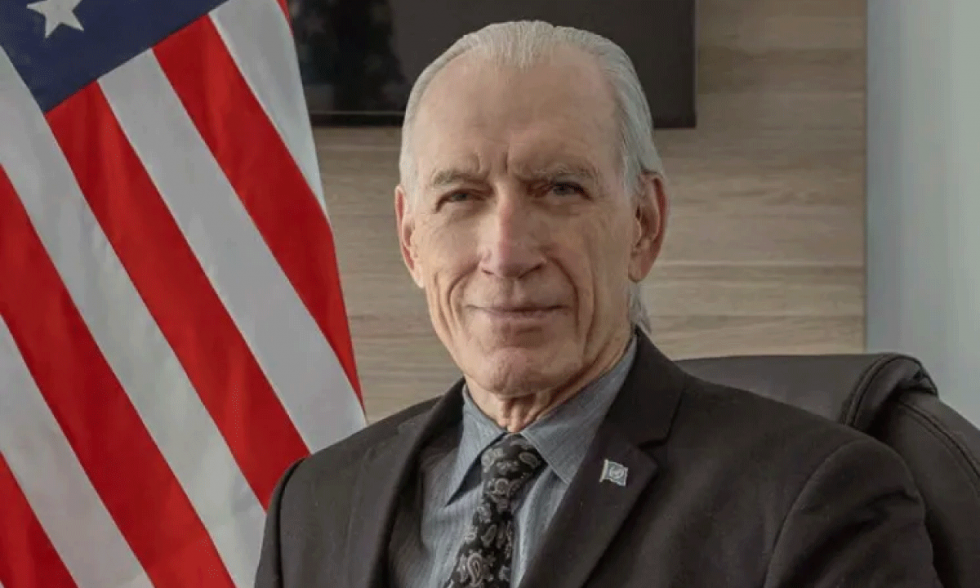
Sherman Roberts, President of Blackwell Global University, discusses the growing importance of the Doctor of Business Administration in shaping strategic leaders and applied researchers. He emphasizes its impact on innovation, executive careers, and global business development.
Comentarios