
University of Tarapacá Delegation Completes Academic and Business Immersion Program in Peru
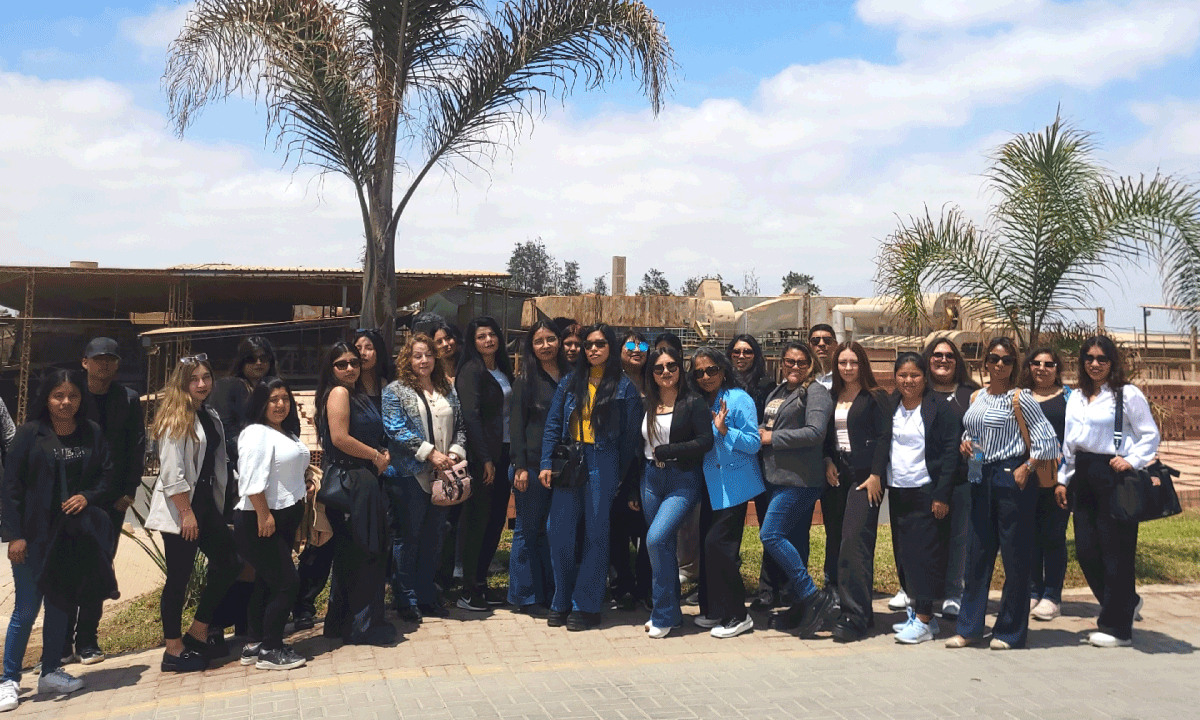
International mobility programs continue to play a fundamental role in shaping globally minded professionals in the fields of business and management. In alignment with this trend, a delegation of 40 students from the University of Tarapacá, a public Chilean university located in Arica, participated in an academic and business immersion program in southern Peru. The initiative was organized by the John Von Neumann Private Higher Education Institute, a Peruvian institution specializing in business-related programs. The activity took place within the broader framework of Doing Business in Peru, a program designed to provide international students with a comprehensive understanding of the Peruvian business environment.
The visit was hosted in the city of Tacna, a major commercial hub in southern Peru known for its strategic position near the Chilean border and its dynamic business ecosystem. The delegation engaged in a series of activities aimed at strengthening their understanding of operations, supply chains and strategic decision-making in sectors that significantly influence the regional economy. By integrating academics with field exposure, the program sought to broaden the students’ analytical perspective of Latin American markets.
The program began with a guided visit to Zofratacna, a free trade zone that serves as a platform for international commerce, logistics and manufacturing. Students had the opportunity to learn how tax incentives, import-export facilities and operational regulations encourage business development within the zone. The visit highlighted the role that free trade zones play in regional competitiveness, demonstrating how companies leverage such environments to scale operations and optimize costs. For the delegation, it was a practical introduction to one of the key drivers of economic activity in Tacna.
Following this, the students visited 7 Vidas, a local craft brewery recognized for its innovative production processes and strong regional identity. During the tour, the group observed the brewery’s manufacturing system, analyzed its supply chain and explored its brand strategy within a competitive industry. The visit showcased how small and mid-sized companies in Peru differentiate themselves by combining tradition, innovation and effective market positioning. For the participants, it illustrated how local enterprises can thrive even in highly specialized sectors.
The itinerary continued with a visit to Ladrillera Martorell, a long-standing company dedicated to the production of construction materials. The students learned about the industrial processes involved in the manufacturing of bricks, the role of the company in regional infrastructure development and the operational challenges the sector currently faces. The session also addressed topics such as sustainability, technological improvements and the relevance of traditional industries in emerging markets. This visit allowed the delegation to examine the complexities and opportunities embedded within an essential segment of the Peruvian economy.
In the afternoon, the group attended the keynote lecture Heart, Head and Liver: A Biopsy of Branding, Positioning and Trends, delivered by renowned branding expert Alan Loayza. The session explored the strategic, analytical and emotional dimensions involved in building strong brands in a global context. Participants examined how contemporary branding integrates consumer behavior, cultural influences and technological transformation, and how organizations must adapt to shifting expectations. For the students, the lecture provided a modern perspective on how branding strategies evolve in fast-changing markets.
The John Von Neumann Institute emphasized the importance of this program as part of its ongoing efforts to promote international academic experiences. As a private Peruvian higher education institution focused exclusively on business programs such as International Business Administration and Accounting, Neumann has been strengthening partnerships with universities across Latin America. Its objective is to support professional development through exposure to real-world environments and cross-border business practices.
The University of Tarapacá similarly highlighted the relevance of initiatives such as Doing Business in Peru in complementing classroom learning with practical perspectives. The university has been expanding its international engagement efforts to equip its students with stronger regional awareness and a broader understanding of interconnected markets. By participating in this program, the students gained firsthand insights into Peru’s economic structure, its business culture and the strategic opportunities emerging in the region.
The collaboration between the two institutions reflects the growing importance of educational partnerships within the Latin American region. Through this initiative, students were able to observe daily business operations, interact with industry professionals and analyze the characteristics of the Peruvian market from an academic and practical standpoint. The experience also encouraged dialogue between students and local actors, helping to strengthen cross-border academic relations.
Upon completing the program, the delegation returned to Chile with a deeper understanding of the challenges and opportunities present in the Peruvian business landscape. Both institutions concluded that the initiative enhanced the students’ professional development, offering them an expanded perspective on international business operations. The experience also reinforced the value of integrating business visits, applied learning and regional cooperation within higher education.
Doing Business in Peru continues to demonstrate the critical role of internationalization in modern education. By immersing students in real business environments and exposing them to contemporary global trends, the program represents an essential step toward training professionals capable of navigating diverse markets. For the University of Tarapacá delegation, this academic journey provided valuable knowledge and strengthened their capacity to interpret the complexities of Latin American industries.
Related Articles

Market signals point to increased coordination between U.S. and Japanese authorities on currency volatility, moving global exchange rates and asset strategies. Traders worldwide are recalibrating positions amid uncertainty over formal intervention timing and scope.

ChatGPT’s strategic prompts are reshaping entrepreneurial education by enabling the creation of automated, high-revenue business models without traditional employee structures. This trend highlights the growing role of AI as both an instructional and operational tool for founders and business learners.

An academic partnership between TEP Institute and Blackwell Global University continues to grow through jointly certified programs focused on applied artificial intelligence and digital transformation. The initiative targets professionals seeking specialized skills across strategic industries.
Comentarios