
AI Bubble Fears Trigger Dow’s Decline and Test Investor Confidence
In recent trading sessions, Wall Street’s rally has reversed sharply as fears of an AI-driven bubble resurface, prompting a notable decline in the Dow Jones Industrial Average. Once fueled by strong earnings from tech heavyweight Nvidia, investor enthusiasm has soured rapidly, raising broader concerns about valuations and long-term sustainability.
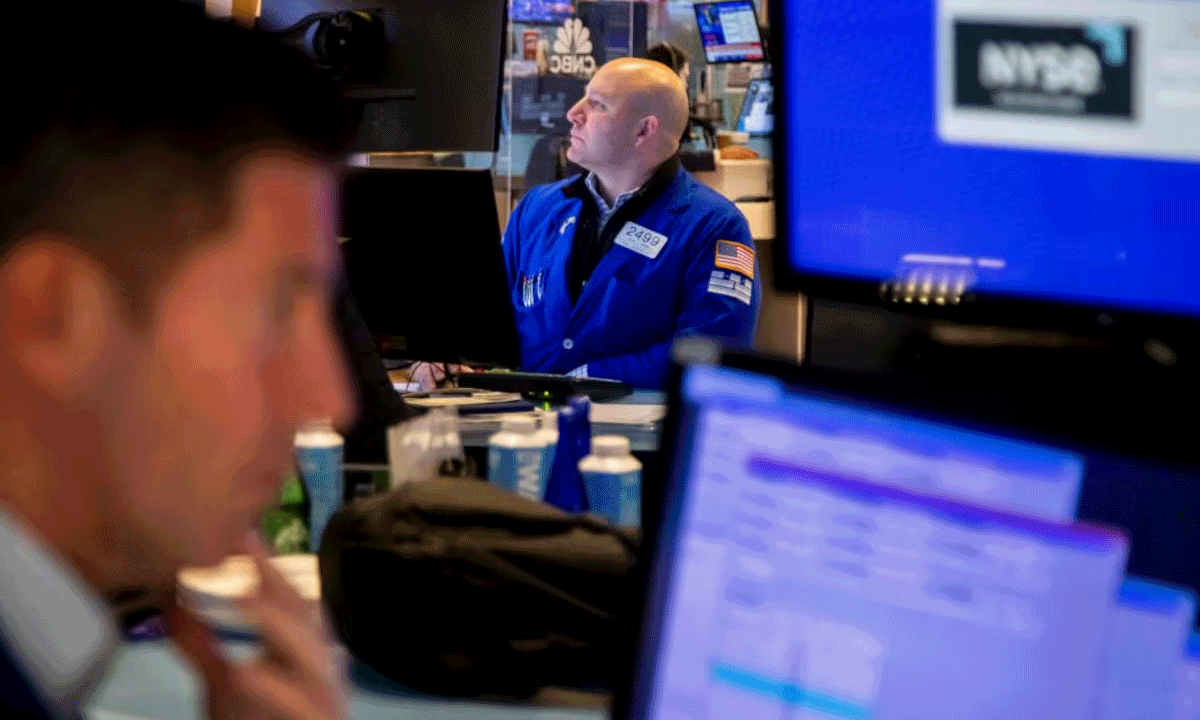
Nvidia’s results initially sparked investor optimism: the company reported higher-than-expected revenue, and its leadership emphasized strong demand for its AI chips. Yet, in a surprising twist, its stock reversed course later in the day, ending well below its intra-session high. This shift has added tension around the broader tech sector, as participants question whether the AI boom has outpaced sound financial metrics.
A key driver behind the pullback is worry that the rapid inflow of capital into AI infrastructure may have pushed prices to unsustainable levels. Analysts now warn that hyper-scaled spending by large companies could undermine long-term returns if demand slows or competition intensifies.
The broader market reaction has been significant. On recent sessions, the S&P 500 and Nasdaq declined substantially, reflecting widespread profit-taking across speculative AI plays. Simultaneously, the VIX, a gauge of market volatility, has jumped, suggesting investors are actively repositioning to hedge against further disruption.
Compounding the risk is uncertainty over U.S. monetary policy. Some investors now believe that expectations for imminent interest rate cuts by the Federal Reserve may have to be reined in, which would increase the cost of capital and reduce margin visibility for high-growth firms. This dynamic adds another layer of complexity for managing long-duration tech investments.
For educators, students and global audiences interested in finance, this episode offers a rich case study in risk management, market psychology, and fintech cycles. It highlights the tension between innovation-driven growth and valuation discipline. In academic environments—particularly in business schools and finance programs—the scenario can serve as an educational moment: how to assess sustainable growth in emerging sectors like AI, how to stress-test portfolios, and how to build strategies that balance upside potential with downside protection.
The current backdrop also raises critical policy questions. Regulators, pension funds and institutional investors must carefully weigh the benefits of allocating capital to transformative technologies against the systemic risks posed by over-exuberance. Should AI companies be subject to more rigorous financial scrutiny? How much leverage or exposure to these firms is prudent for long-term portfolios? These are strategic issues that financial educators and policymakers alike must grapple with.
Globally, the ripple effects of U.S. market jitters are being felt. Asian markets have also weakened, reflecting real concern that a prolonged unwind in AI valuations could reverberate beyond American shores. Emerging markets that rely on capital inflows to support technology innovation may face funding pressure if risk aversion intensifies.
From a learning perspective, the unfolding correction provides an opportunity to revisit classic portfolio theories—such as diversification, mean reversion and long-term asset allocation—in light of 21st-century disruptions. It is a moment to remind investors and students that growth stories must be anchored in fundamentals, and that innovation, while powerful, does not immunize markets from corrections.
As markets navigate this recalibration, it remains to be seen whether the drop marks a temporary cool-off or the beginning of a more extended repricing of AI-related assets. For now, volatility serves as a reminder that risk remains a fundamental part of investing—especially in sectors where hype and hope often drive capital.
Source: CNN
Related Articles

Mental health challenges are reshaping healthcare systems and professional training worldwide. Specialized education in clinical psychology is emerging as a key response to this growing global demand.

Sherman Roberts, President of Blackwell Global University, discusses the growing importance of the Doctor of Business Administration in shaping strategic leaders and applied researchers. He emphasizes its impact on innovation, executive careers, and global business development.

Private education institutions are increasingly adopting artificial intelligence to redesign how learning is delivered and managed. This shift is creating scalable business models that blend personalization with operational efficiency.
Comentarios